

Showing posts with label Monsanto. Show all posts

Wednesday, October 29, 2014

VOTE!

In Oregon, where our schools are inadequately funded and some counties don't have the tax base to hire a sheriff, we are finally being showered with cash. Record amounts of the stuff are pouring in to defeat a little ballot initiative that doesn't even have guns or fetuses in it anywhere.

The initiative, to require labeling of genetically modified foods, is similar to ones already defeated in neighboring California and Washington. All three started with polls indicating some 80% of the voters approve of labeling, but support dwindled under a crush of TV ads financed by the likes of Coca-Cola. The ads are following a well-worn, successful script. And it's aimed right at liberals.

If it was aimed at conservatives, many of whom might not care one way or the other about GMOs, there'd be a lot about "government overreach." There might be a suggestion that GMO labeling is a threat, somehow, to job creation, or personal liberty. And that it would be horribly expensive.

Home Grown Arugula
This campaign does indeed say that it would be horribly expensive, but adds that "it would hurt those who can afford it the least." That part is for the liberals, who are happy to buy heirloom arugula at Whole Foods but can be expected to care about the poor. In fact, one ad soberly maintains that adding GMO labeling to all the other labeling that is already required would raise grocery bills by "up to $500 a year" for a family of four. Gracious! Evidently we will need to examine each head of cauliflower before sharpening up the ostrich plume and inking the results. (Independent analysts put it closer to $2-3 per year, which is, after all, included in the "up to $500" claim; and when you've got the coin to drop millions of dollars on a campaign, the difference between two dollars and five hundred dollars is kind of a rounding error.)

Point number two, for the liberals: this measure is "poorly worded." Liberals will respond to that. Some of us devote hours every week to correcting other people's apostrophe use. Let's see, says the liberal: I like this measure, but could it be worded differently? Might there be unforeseen consequences from the way it's worded now? Things that only a very thoughtful person might anticipate? I'm a thoughtful person...maybe it's the right idea, but the wrong measure. The liberal's pencil hovers over the "no" column.
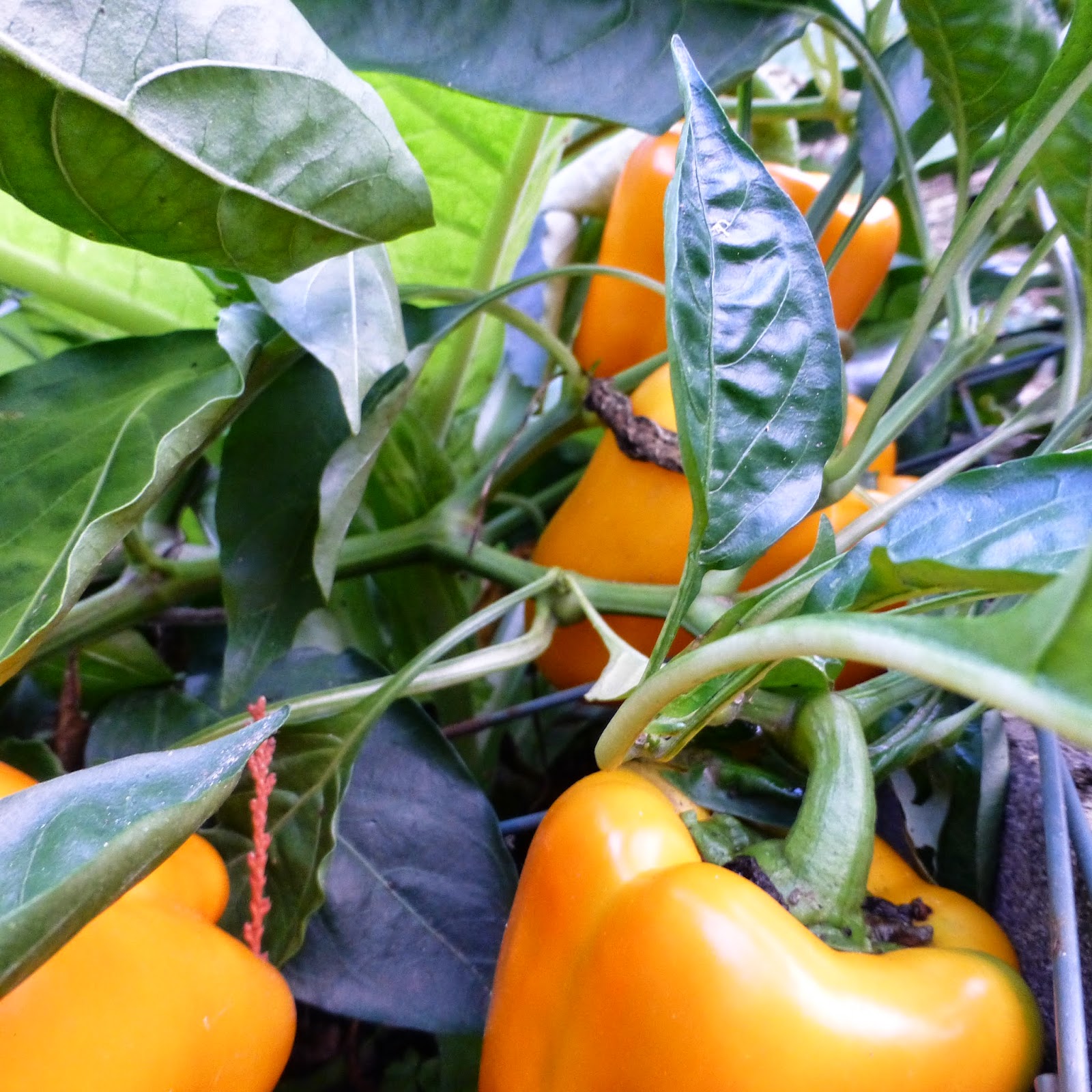
Hmm. The ads seem sincere and reasonable. They don't shout TOO EXTREME FOR OREGON, which would be a red flag. A soupcon of doubt has been introduced. Liberals even know what soupcon means in French.

Point number three: the straw man, dressed up in professorial tweed. "This will introduce needless anxiety about GMOs that is not based on science." Liberals love science! If it is true that studies show GMOs don't endanger health (ignoring, for the moment, the catastrophic rise in diabetes, asthma, allergies, heart disease, and the like that neatly coincides with the advent of GMO food, and trusting that Monsanto's scientists have it right), then it is unreasonable to ask those big corporations to label their food.

But. There are legions of us liberals who have no problem polluting our own bodies on a daily basis with pizza and beer, but still care about things beyond our own skin. Maybe we are concerned that organic farmers cannot protect their crops from windblown GMO seed. Maybe we are concerned that the ubiquitous Round-Up Ready GMO crops have resulted in soaring pesticide use that pollutes the watersheds and destroys the soil and harms the biosphere, including our pollinators. Maybe we feel helpless to dismantle an agro-industrial complex that is capable of producing a shitload of Cheetos--which we will totally eat--but is not in any way sustainable. And maybe we realize we can only get movement on the big issues, like GMOs and climate change, issues that have proved intractable on a national level, by using a local lever.

Technology is seductive. It's tempting to put faith in the Army Corps Of Engineers to have dominion over water, even when (billions of dollars later) it's clear that their math skills and concrete don't work nearly as well as the natural wetland environment that they have replaced. It's tempting to think someone clever enough to twiddle a genome can be trusted to manage any repercussions that might come up.

But some of us liberals are actually conservative. Some of us would prefer to run a thorough credit check on Pandora before letting her open her box. Pandora's a slut.

Saturday, June 23, 2012

Oops! Totally Did Not Mean For That To Happen.

My Dad, unmodified
Californians are considering a proposition to require genetically modified foods to be labeled. Such a label might read "Warning: Contains Genetically Modified Organisms." Monsanto, the world's largest GMO producer, is agin it. The corporation believes this will have an adverse effect on sales. And it probably will, at least more so than if the label read "Boy Howdy! Genetically Modified Organisms."

Critics of the proposition believe the labels might lead consumers to reject GMO products without having any understanding of their environmental and economic benefits. There is something to this. People might indeed veer away from the stuff even if it is completely safe. It is true that many people react viscerally rather than investigating. For instance, I automatically, without further review, discount any proposition made by a Republican, but it does not follow that all Republicans are unworthy of support. No. They are unworthy of support because they are short-sighted, profligate, womb-invading planet pirates with cash-encrusted pockets the size of entire countries.

So what is genetic engineering? It is the deliberate manipulation of a living genome by the insertion or deletion of a gene. Deletions are dicey: the sucker is still in the hard drive somewhere and ignorance of this fact will dog you all the way to divorce court. But usually genes are inserted instead, and usually across species. Most often a bacterial gene is inserted into plant DNA, but it could totally be a squid or something. The gene can be inserted by attaching it to a virus and sending it on what amounts to a guerrilla mission, or tiny little particles can be fired into their targets with something called a "gene gun."

This process has resulted in plants that grow their own insecticides or are impervious to our own herbicides, or--in a breakthrough for the fossil-fuel industry--tomatoes that remain sullen and leathery and can be transported over huge distances until they arrive at their destination markets to "ripen," which is the industry term for turning reddish.

Animals too have had their genomes twiddled with. Using a "gene howitzer," a goat has been engineered to produce incredibly strong spider silk in her milk, which is suitable for body armor and other military uses; pigs have been grown that glow green in the dark.

Ask anyone who has ever suffered that common nightmare about the roving band of bullet-proof goats wearing night-vision hoggles: this has the law of unintended consequences written all over it. It should sound familiar. Settlers in Australia thought they were bringing in a tasty touch of home with their rabbits, and now the entire country's topsoil has been replaced by bunny fur. We're no good at this.

It isn't that we can't aspire to greatness. If the gene that persuades songbird chicks to poop in their own little transportable baggies could be shot into urban dogs, the world would be a better place. Likewise might we be better off if the pig-snout development gene could be inserted into mosquitoes so that they grow blunt proboscises, and are forced to queue up at the Red Cross for charity blood boxes. But things get away from us. The concentration of logy mosquitoes might then lead to localized populations of rotund chickadees that can barely get off the ground and threaten the eyesight of small urban dogs. The birdhouse industry will falter during a retooling phase and new markets will spring up to produce designer chickadee deflectors for pugs. It's hard to predict, or control.

If you look around at nature, you'll find that everything is pretty much the way it's supposed to be. That's not so much because any particular deity wants it this way. It's that if it were supposed to be another way, it would be. Which is not to say things remain static. Stuff happens. Little stuff, big stuff. Lightning strikes a tree and creates new housing opportunities. Rocks fall out of the sky and all the dinosaurs pack it in. Life is opportunistic. If you pull a peg out of the wall, something's going to happen. Either something will burrow into the hole and lay eggs, or the wall will come down on top of you.

So without doing a lot of research, I am on the distrustful side of the genetic engineering development. We've done nothing but tinker since we crept out of the gorge and danced on the savannah. And I don't think our record of so-called mastery is very good.

But I am excited about the possible introduction this year of a fast-growing salmon. Throw in a baguette the size of a missile and Jesus will be on board with it, too. I know just where they'll put it. Right off the Pacific into the mighty Columbia, which I can see from my house. Any lesser river and the poor bugger will scrape his sides on the banks.

Saturday, March 10, 2012

Horticulture, Homeless Dave, and Homicide

Russian scientists just grew an antique campion plant from a 32,000-year-old seed, and I can't even sprout an aster from last year's seed packet. They claim the campion seed had originally been buried in a burrow by a squirrel, where it froze solid, and was only recently recovered and prodded into life. It's hard to count that many rings in a non-woody plant, but if the age estimates prove out, it will be by far the oldest plant to have been generated. The scientists in charge are pretty confident after interviewing the squirrel in question, who was found at a local library looking for the card catalog and muttering to himself. They're excited about growing an old campion next to a new campion and studying the evolution of a plant in real time. But they'd better keep a close eye on it, or somebody might take it, like Homeless Dave.

That's what happened to our lemon. Homeless Dave was but one of a surplus of Daves we had in the neighborhood; we have enough that everyone can have one of their own. We've got Big Dave, Little Dave, Store Dave, Old Dave, New Dave, and Republican Dave, who moved away in search of lower taxes. My Dave ("Old Dave") had befriended Homeless Dave, if by "befriended" you mean "didn't run away screaming." Homeless Dave was a toothless Vietnam vet with a mohawk and a drug problem and a voice that could make bridges go up and down. He favored feathers, large knives, shiny objects, really large knives, and psychotic breaks. He would show up at inopportune times (although, to be truthful, no time was particularly good) and bellow conversationally until you gave him some money or food. Dave, who has a saintly nature he tries to obscure with curmudgeonliness and targeted flatulence, paid him attention and cooked him gummable meals. One cold night, while we slept, he came by and built a raging bonfire in the Weber and dragged it under the eaves of our house where he was trying to escape the wind. Dave brought him inside long enough to get a hot meal in him and sent him away while I crossed Social Work off my to-do list. Homeless Dave was a pain in the ass. I wished him safe and warm and happy and in Central America.

About the lemon. We had a lemon tree we'd bought that claimed to be hardy to 20 degrees. And it was. It was hardy, but that didn't mean it was in a good mood. We kept it outside in a pot and knitted sweaters for it and spooned juice into it and sang to it and bought it a Savings Bond and finally, after about ten years, it began putting out experimental fragrant flowers, a few of which finally resolved into tiny fruits around five minutes to winter. We watched them carefully as they struggled to grow, and after about eight months they began to veer yellow, and we lost all but one, but that one got fatter and yellower until Dave pronounced it just about ready to eat. One summer day he came around the back of the house to find Homeless Dave mopping juice off his grin. "GREAT LEMON, NAMESAKE!" he said. "BEST I EVER HAD!" And Dave fingered his pruning shears while contemplating his chances of successful homicide against a well-armed crazy ex-Marine. Ultimately he let him go with stern words and an omelet.

Homeless Dave showed up with useless gifts, scavenged or stolen, but he meant well. One time he pounded on the door before dawn with an attitude and a knife that wouldn't have looked wrong on Orion, demanding attention from my Dave as he was trying to leave for work, and Dave told him he'd worn out his welcome. We don't know where he is now, but if he showed up bearing a bouquet of 32,000-year-old campion flowers, it wouldn't surprise me in the least. And that would be a blow to science. I'd also watch out for Monsanto. If they even think they can engineer a shortcut to pre-frozen vegetables, they're going to try.