Wednesday, May 29, 2013

You Won't Be Needing Your Head


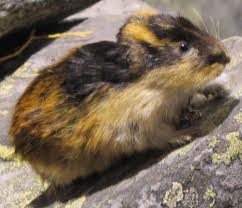
Can't look at this dude too often.

Within the last few weeks, a garbage truck serving the local gas company in Montana caused a minor ruckus, and Pope Francis named over 800 new saints. These two news items have been packaged in the same sentence for you courtesy of Murrmurrs, the home of weird analogy.

The gas company, as we all know, adds an odor to its product so you can tell if you're in danger of a natural gas leak. The gas by itself doesn't smell at all. Most of us know what the fake gas smell smells like, but just in case we don't, the gas company is happy to smack some on a scratch'n'sniff card and mail it to us. Recently, boxes of these cards were deemed expired, and had to be thrown away.

The pope's new saints got that distinction by allowing their heads to be removed over five hundred years ago for refusing to convert to someone else's religion. This is a tried-and-true method for achieving sainthood, but I'm not tempted.  I've never been all that hot on posthumous awards anyway. That's one of the beauties of being an apatheist: if someone held a scimitar to my neck and demanded I give allegiance to the one true god, I totally would, because I don't care. I've got no place to go when I die, and I'd just as soon put it off.

For the record, in spite of the fact that I hold no particular beliefs, I am against religious persecution. Put me down in the anti-persecution column in general.

But it's hard to visualize all those headless saints lined up in the clouds without thinking that religious persecution ain't what it used to be. You had your Charlemagne converting all of Europe at the point of a sword, you had your Crusades and your Spanish Inquisition, you had my forebear Elder William Brewster risking months of certain nausea to be free to inflict his religion on someone else, you had your witches roasting on a stake, and of course you have Mr. Hitler and his unfortunately tardy suicide.

Now we have people declaring that there is a war on religion. Mostly they mean a war on Christianity, since whacking Muslims is considered more of a patriotic gesture, and nobody gives a damn about atheists. Modern religious persecution covers the spectrum between A and B, between punting the little lord Jesus out of his manger at the town hall and wishing people a happy holiday. The healthcare mandate is implicated too, as there seems to be some threat that free contraception must be provided to employees in defiance of God's will. So far, no one's made much of a stink about keeping goat sacrifice illegal.

There's been a concerted effort to get out the word that there is a war on religion. Talking points have
been distributed to politicians and the media, just like the fake gas smell on the scratch'n'sniff card. Enough of those cards get into circulation and you have a vigilant public passing on their own emails and heightening the sense of danger. The internet is buzzing with claims of persecution. Just the other day I read the bitter complaints of harassment by a woman who claimed all her online comments that mentioned Jesus were getting thumbs-downed. In fact, the horror of thumbs-downing is reaching epidemic proportions.

The garbage truck in Montana was the final resting place of boxes of those expired scratch'n'sniff cards from the gas company, and as it compacted them while rolling down the street, a whole neighborhood was filled with the manufactured smell of gas. The garbage company, let's go ahead and call it Fox News, generated hundreds of panicked calls to 9-1-1. There never was a real gas leak, but it sure got a lot of people excited.

Saturday, May 25, 2013

The Cerebum

I am exquisitely sensitive to medically significant changes in my body. In fact, there is hardly an aberration that I can't link directly to my own death in some way, and that is why I recently decided I should quit crossing my legs. I have a permanent dark spot on my right leg caused by the pressure from my left knee, and it looks plenty fatal to me. Now every time my legs are crossed, I am visualizing the compressed area as a sort of embolism factory. Some day I'll stand up and the little bugger will shoot straight to my brain and take me out.

Problem is, I can't seem to control my legs. They cross themselves. I have no idea when they're doing it, but I'll look down and there they are, crossed. It's as mysterious as the appearance of a lap cat. You look down, and there you are hosting a cat, and you have no idea when it showed up. Obviously I know better than to believe my legs are crossing themselves. That would be ridiculous. So I assume that they are under control of the auxiliary brain in my butt, a legacy of my stegosaurian forebears.

The famous second brain of the stegosaurus was postulated soon after the discovery of the first fossil skeleton. Scientists examining the skeleton noted that the animal was the size of a bus and yet had a
brain case no bigger than a dog's. (And not necessarily a border collie's, either. The Afghan Hound has a brain the size of a pistachio, just big enough to operate its shiny coat.) It seemed way too small to run the controls of a big dinosaur. But there, in its proto-tushie, was a canal twenty times larger than the brain case. Clearly, the butt was carrying the load of operating the animal, in the same manner as fire engines are steered from the back as well as the front. If you're a hungry stegosaurus on the hunt for a quick cycad, you don't want the rear end swinging out too far.

The original paleo-posterior postulator did draw some conclusions that have since been discarded. The famous plates running along the animal's back were originally thought to lay flat along the top (stegosaurus means "roof lizard"). And we now recognize that that was not the default arrangement, except on Sundays, when the plates were slicked down with a center part and a cowlick at the back, like Alfalfa. Gradually the notion of the butt brain was relinquished as well. Modern paleontologists believe that the stegosaurus was able to run his entire self with his tiny little head, albeit not well enough to make it all the way through the Cretaceous.

But that doesn't mean I don't have one. Anyone would assume I wouldn't need an auxiliary brain to run things south of my equator, because nothing on me is all that far from my head. But my head, like the roof lizard's, is very tiny--children's hats fit me--and busy with stuff like wondering if chickadees can tell each other apart. Which might be why I fall down so often. A secondary intellect in the fanny would be well placed to take care of things like leg crossing and creative flatulence, and if mine isn't doing such a good job keeping me upright, well, who's to say my cerebum isn't just trying to be witty? What else do you expect from a smartass?

Wednesday, May 22, 2013

How To Keep It Up Forever


Kansas is thinking about outlawing sustainability, so that solves that. It's a great example of outside-the-box thinking, and the Reality Box has really been cramping our style. Kansas means business. It is duct-taping a legislative brick to Thelma and Louise's accelerator pedal. Look out world! This is the kind of creative thinking you can get when you quit teaching evolution.

I've been thinking of this law as the Lemming Liberty Act, but it occurred to me, as it often does, that I might be selling lemmings short, so I did a little research. There are a lot of myths about lemmings.  We're familiar with the mass suicide idea, but lemmings have inspired other ideas over the years. The Inuit people are said to have believed that lemmings were spontaneously generated during stormy weather and fell out of the sky, and a geographer named Ziegler put his official (white man) stamp on that notion in 1530. I am assuming that lemmings popped out during storms and no one could think of any way they could have gotten there but to have dropped from the sky, sort of like how it rains earthworms on the city sidewalks during a sharp downpour.

Well, this is just the sort of thing people like to come up with. There's nothing so old-fashioned about it. Even now, billions of people note how splendidly we are endowed with the right temperatures and the right food and the availability of liquid water and other things we really need, and they conclude that all of this stuff was put here just for us, because we're just that special. It doesn't tend to occur to them that we evolved and thrived in response to what was here, and if something different was here, we wouldn't be here at all, but maybe something else would be. Maybe some methane-huffing critter without quite so much of a sense of self-importance. And it doesn't occur to them that if we somehow jigger the works, we can create the conditions in which we will not thrive at all. Here we are: we must have dropped out of the benevolent sky.

The spontaneous-generation idea was soundly refuted by the noble natural historian Ole Worm, who demonstrated that the lemmings were perfectly respectable members of the rodent family, and were probably created by slightly older lemmings in the usual way, and not spontaneously generated during storms at all, although he did agree that they blew in on the winds. Sometimes science advances in increments.

The mass suicide notion is also faulty. Lemmings do not, in fact, decide to get in line and charge off a cliff to certain death. That isn't their plan at all. And yet they do suffer massive die-offs periodically, when their own overpopulation and thin resources encourage them into a mass migration for better conditions. They can swim, but if in the course of a migration they start swimming in a body of water that is a little too large, they might get too far away from shore and drown, and their little bodies will end up stranded in the reeds like meatballs in a stoat restaurant, a vision that might have given rise to the spontaneous-generation idea to begin with. Although why a storm should whip up dead rodents and drop them on the ground is still a mystery. Anyway, it is incorrect to conclude that the lemmings are trying to kill themselves.  They're not. They end up just as dead, but they don't mean to. They're like us that way.

So I'm sticking with the Lemming Liberty Act. If Kansas wants to make sure anyone who wants to pop down to the Gulf and swim to Belize is free to do so, I'm willing to go along with it. Or I would be, if all us lemmings weren't roped together.

Pogo Fans: Can you help? A reader wants to find the original source of a quote I attributed to Albert The Alligator. It was "funny how a handsome man look good in any old thing he throw on." If any of you have old Pogo books with this particular strip, let me know.

Saturday, May 18, 2013

It's Either A Dunflap Or A Whimbitcher


It's May again, and regular readers know what that means around here. It means the kitchen is crawling with Windex-scented ants, the chickadees are parked in the birdhouse waiting to see which one of them an egg will drop out of, and I've just come back from my Birdathon trip with the team "The Murre, The Merrier." This is my second year with the group, which qualifies it as a tradition. In a Birdathon, an individual or team tries to spot as many different species of birds as it can in a given period, even though many of them already come spotted.  For this effort, good people, friends, beloved blog readers, and resigned, annually-hit-up family members part with cash for the Audubon Society and its conservation work. Thank you!

Of course, I suck at this. My bird-identification skills are not good enough to nail down a seat in a respectable birding van, so I bake cookies. Everyone else is better than I am, and some are certifiably freakish. Watching them nail down bird IDs is like watching the Rain Man recite the phone book. We were going for 100 species. The team record is 108.

A note: the rule is, it only counts if two people identify it. And hearing its song counts. Real birders are very good at that because they know the language. For me it's like going to a bazaar in a foreign land, with people crammed in elbows to armpits and all hollering in a whole different alphabet. I can't make out a single word. The birder can stand in the center of the plaza with her eyes shut and pick out the one fellow who's hawking ground yak balls, and tell you which stripey tent he's in, too.

If you see a "life bird," that is, a bird you haven't seen before, you are expected to execute a "life bird dance," hopping from one foot to the other with arms flapping. If you're rhythmically challenged, a "life bird wiggle" will do. If you're the most inexperienced birder in the group, you can be doing a lot of wiggling. If you're forgetful on top of it, you can get three life bird dances out of one bird. It's downright aerobic. I was thrilled with my first life bird of the day because I'm not likely to forget it: the lazuli bunting. Not so any of a number of speckled mud-pokers on the coast. For me, discerning whether it is Greater or Lesser, Semi-Palmated or Full-Bore Palmated, or Long-Billed or Short-Billed is hit or miss, more or less. I couldn't tell them apart if they were standing in a police lineup with the measurement dealie behind them. "Is that a life bird for you?" my teammate will ask. Sure. It will be next year, too. It just doesn't take. Hell, I've looked up the female red-winged blackbird in the wrong section of the field guide at least fifty times now. No offense, but I'm not going to remember you if I meet you, either.

Don't think of this as a walk in the park. It's cutthroat. There are other teams out there. We've got people who say things like we'll pick up the tits in the parking lot and score the rail on the way to the coast to knock off the peeps and the rhinoceros auklet, and then we have people like me, who just like to hear that kind of talk.

We always do our best, but this year there was the added incentive of a challenge from Patty's team, The Paddywagon. (The Red-Breasted Wine Suckers were not considered a serious threat.) The mysterious Patty texted us throughout the day with updates. She was decent enough to give up the location of the coveted Red Knot and we reciprocated with her missing Kingfisher. We were holding our own, were even a little ahead, and then roared to a finish with a record-smashing 119 birds as the light began to fail. We posed with 119 fingers aloft, got back in the van, and rounded up to 120 by bagging a merganser from the vehicle as we hurtled back home. Fists were pumped and high-fives negotiated, while a fascinated kingfisher kept pace out the left window. Then Patty texted in with a final tally of 121.

Shit.

The Murre The Merrier: photo by Max Smith
Even in the interest of public safety, we didn't need the big warning Birdathon sticker on the outside of our vehicle. If you see a van weaving down the highway for forty miles with all twelve heads craned out the windows looking for a kestrel on the wire in the dying light, you know enough to give it room. You just know.

Wednesday, May 15, 2013

Butt Splinters


It could be said--it has been said--that I can be a bit of a princess when it comes to certain things, like butt splinters. I have found myself driven to distraction by the sudden manifestation of a butt splinter, and will dig inside my pants to try to find and evict it, even in socially inappropriate situations, which, I am told, is all of them. It always feels like a tiny little splinter is in my underpants. I manually examine the irritated micro-area on my person, and the adjacent underpantly material, but I rarely find the culprit. Someone once pointed out that I might be able to reduce the butt splinter frequency by wearing a thong, but wearing something in which the entire garment disappears is not an option for one as delicately wired for intrusions as I am. It has also been suggested that I could distract myself by thinking of something else instead, but I don't like to think that much. It interferes with looking at shiny stuff. That's what makes the butt splinters so vexsome.

Since I never find anything in my underwear that doesn't belong there, at least since menopause, it has occurred to me that the butt splinter itself is actually a random reordering of my skin cells. A small group of them has lined up just so and oriented themselves such that any pressure will drive them in. It doesn't sound like a big deal, but this is what you get when you're a person of few physical complaints and nothing whatsoever on her mind. You get phantom butt splinters. And you tip over a lot.

I accept that other people are not prone to butt splintering, although I suspect that many of them simply will not admit to it, but what I don't understand is how Bill McNeely managed to live with a nearly three-inch knife blade inside his back for several years without realizing it. He admits it was itchy, and he apparently made a habit of pawing at it, but the actual embedded knife was under his radar. And, I suspect, under a massive amount of what we will call personal insulation. You get enough meat on you and all kinds of things can hide in there. I didn't realize that until I developed back fat folds, and when I bent over to tie my shoes, dimes and Skittles and stuff fell out.

Mr. McNeely should have, at the least, been suspicious of his itchy spot. Whatever it was wasn't going away. Moreover, the itchy spot was at the exact same location as a knife wound he had suffered years earlier. He had gotten medical attention for it at the time, but not, I would argue, the finest in medical attention. By all appearances, the doctor hacked off the hilt and stitched him up. Now the sort of lack of attention that would cause a man to host a blade without realizing it could, I suppose, be put down to the fact that he is Canadian. Canadians are noted for being unflappable, although I will maintain that this is an untested assertion, because nobody ever really tries to flap a Canadian. More to the point is that Mr. McNeely is an extreme Canadian, holed up just under the roof of the planet, at the tippy top of the Northwest Territories. The Northwest Territories are so wicked cold nobody even wanted to claim them for a province. People just refer to them as "up there."

And it's so cold that even the women have to worry about their balls snapping off (oh, they have them). The sun briefly cruises the horizon like a pea rolling off a plate. The surgeon operates by the light of the Aurora Borealis. But now the glaciers are calving, the polar bears are stranded on dots of ice, and the locals are ordering tomato seedlings for the first time. Bill McNeely has finally thawed out enough to feel pain, and if the rest of the First Nation peoples do too, Exxon Mobil is going to have a lot to answer for.

Saturday, May 11, 2013

Hi-oh, Nasal Ranger!

The Nasal Rangers

My mommy was a very nice person--everybody thought so--and I never once thought she was trying to kill me, until the day we visited a couple old ladies whose apartment reeked of ammonia. My little nose twitched in vain for pockets of oxygen. We were probably only visiting for the length of time it takes to drink a cup of coffee, but it seemed possible I would perish before then. I looked at the three women's faces the way you check the flight attendants for signs of panic when you hit turbulence. No one else seemed to be concerned.

When I was little I could be done in by smells. Anything out of the ordinary might be fatal. Not cigarette smoke, of course. That was everywhere. But odd cooking smells in other people's houses, people who used olives and fish and sauerkraut instead of canned green beans and chicken and Minute rice--those struck fear in my heart. Or the devastating fug my brother left in the bathroom, a lingering toxic stew of Camels and Aqua-Velva and farts that would send me to the basement to use the toilet with the cracked seat and the spiders.

We tromped off to junior high saturated in Ambush and Shalimar, and later to college in Patchouli and Body Odor, and didn't think a thing of it. You get used to stuff. Now I find cigarette smoke rare and sickening, and any kind of perfume. But I can't think of any bad food smells. Dave's worked in so many mill towns that he thinks paper mills smell like money.

For some reason, though, the folks who live around the place where the whole city of Portland sends its food scraps for composting--meat and bones and everything--are putting up a stink about the smell. Even though we deliberately stuck it out in the boonies where we won't have to listen to anyone complain. We all think they're terrible whiners, and we should know, because we live miles away and it smells fine from here. It's such a subjective thing, odors. At least I used to think it was subjective, until I found out about the Nasal Ranger. When the Nasal Ranger comes through, he can document just how smelly something really is. He can assign smelliness numbers to it, and put the numbers on paper and roll it up and smack lawyers with it and everything. He is a hero.

I assumed that the Nasal Ranger used some kind of device. A box, maybe, that sampled air and analyzed it and spit out spiky colored graphs indicating parts per million of an assigned group of noxious odor molecules. And if there was a particularly high spike of Rotting Meat molecules at the compost facility, the neighbors could make themselves a nice case.

But there is no such box. In fact, the Nasal Ranger is the device, not the person. It looks like a boot and the person puts it on  his nose and breathes in. This isn't what I expected at all. It's like when Dave takes the milk out of the fridge and gives it a sniff and his whole face pleats up and he says "here, smell
Coffee Roaster On Fire
this." No! I do not want to smell that. You can wave it at my smell detector box and wait for the readout, but I do not want to smell it. But here these guys are putting their Nasal Rangers on their snoots and breathing in deep.

The way it works is they have one tube for the obnoxious air and one tube that filters all the obnoxia out, so it smells like nothing. And there's a little dial you can turn so that you get more and more of the filtered air, and at the point you can no longer (personally, subjectively) detect the icky air, you have a usable number, a dilution factor. We could use the Nasal Ranger on our block, where a coffee roaster has moved in, producing an acrid burnt smell that nobody really likes. In fact when it looked like the roasting facility was burning down the other day, the neighbors stood around and cheered. Although that might have been for the firemen going up the ladder with names on their butts. The smell from the donut shop around the corner is equally strong, but nobody pitches a fit about that.

It's too bad I didn't know about this back at the Post Office. I spent a couple years sorting mail next to a
bean-burrito eater who was disinclined to part with any of his video poker money for soap. I would love to have called in the Nasal Ranger. And his sidekick, Snotto, too.

Wednesday, May 8, 2013

Here's The Scoop


There should be a warning on this blog for first-time readers. I might tell you we're all going to the zoo, but I distract myself, and before you know it we're holed up behind a dumpster in an alley somewhere with the rats and the vomit. Like in my last post, where I had every intention of talking about ice cream, and somehow veered into pubic lice instead. It's probably disconcerting. I'm used to it, myself. Several times a day I get up to go do something somewhere, but I end up somewhere totally else, although it's usually in front of the refrigerator.

So I'm going to try again, with the ice cream. I like ice cream. Ice cream lines up the pleasure centers in my brain like xylophone keys and bongs on every one of them. But I didn't much like it as a kid. I was a picky eater. Food had to follow three rules: it must not have flavor; must not meander across the plate and cross-contaminate the other food islands ("juice creep"); or be beets. Juice Creep was a constant problem. Mom's Swedish Meatballs passed the test because they always had flat spots and didn't roll. Ice cream failed. You put a scoop of ice cream on a plate in Washington, D.C. in the summertime and add thirty seconds, you no longer have ice cream. You have a wet spot. What I wanted was cake. Some combination of the way Mom made cake and the humidity allowed a girl to roll the frosting right off the cake and eat it last. All ice cream did was dampen the cake. And by itself, it wasn't all that great.

I remember when ice cream got really good. It got expensive at the same time, and it got called "premium." Evidently, before, the stuff was made of crap. For instance, there was a period of time (the Metrecal Era) you could buy something called "ice milk." It was a way to keep your girlish figure while wishing with all your heart you were eating ice cream. Nobody came up with a worse idea until tofu brownies and carob chips.

It wasn't just ice cream. I didn't like pie either. Especially Mom's apple pie. I had not actually gone to the trouble of trying it, but it was unacceptably runny and didn't look anything like cake, which is what I wanted. Cake with rollable frosting. I finally gave pie a shot in my twenties and spent the next year in a fruitless search for recipes for Retroactive Pie.

Now all ice cream is good. There are specialty shops that make their own ice cream out of ever more exotic ingredients. Olive oil. Balsamic Vinegar and Pepper. Lavender Compost Fudge Swirl. Marigold and Lug Nuts with Ribbons of Perspicacity. A local shop has lines out the door and around the corner at all times of the day even though you have to fork over eight bucks for a scoop the size of a golf ball.
The current menu at Salt & Straw
The line is so long that people at the end of it get confused and think they're at the DMV. The real latecomers get in line with packages to mail.

And it's all worth it. The eight bucks a scoop and the wait in the line and everything. I could eat ice cream every day now. It's a fine thing to do while you're waiting around for the research showing ice cream is good for the heart.